Two tendons – the patellar tendon and the quadriceps tendon – keep it in place and connect it to the tibia (shin bone) and quadriceps muscles respectively.

Two tendons – the patellar tendon and the quadriceps tendon – keep it in place and connect it to the tibia (shin bone) and quadriceps muscles respectively.


Some common kneecap conditions include:
This refers to the movement of the kneecap out of the patellofemoral groove, often to the side of the knee joint. A kneecap dislocation will result in pain, swelling, and bruising in the knee joint. Kneecap dislocations often resolve on their own but can also be treated with a reduction (or repositioning) of the kneecap. Regardless, this should be followed by bracing and several sessions of physical therapy to prevent a recurrence.
This refers to the movement of the kneecap out of the patellofemoral groove, often to the side of the knee joint. A kneecap dislocation will result in pain, swelling, and bruising in the knee joint. Kneecap dislocations often resolve on their own but can also be treated with a reduction (or repositioning) of the kneecap. Regardless, this should be followed by bracing and several sessions of physical therapy to prevent a recurrence.
This refers to the movement of the kneecap out of the patellofemoral groove, often to the side of the knee joint. A kneecap dislocation will result in pain, swelling, and bruising in the knee joint. Kneecap dislocations often resolve on their own but can also be treated with a reduction (or repositioning) of the kneecap. Regardless, this should be followed by bracing and several sessions of physical therapy to prevent a recurrence.
This refers to the movement of the kneecap out of the patellofemoral groove, often to the side of the knee joint. A kneecap dislocation will result in pain, swelling, and bruising in the knee joint. Kneecap dislocations often resolve on their own but can also be treated with a reduction (or repositioning) of the kneecap. Regardless, this should be followed by bracing and several sessions of physical therapy to prevent a recurrence.
The symptoms of the various kneecap conditions will vary according to the type of condition you have. However, there are some common signs associated with kneecap conditions which you can look out for, such as:

You should see a doctor for patellar conditions if:
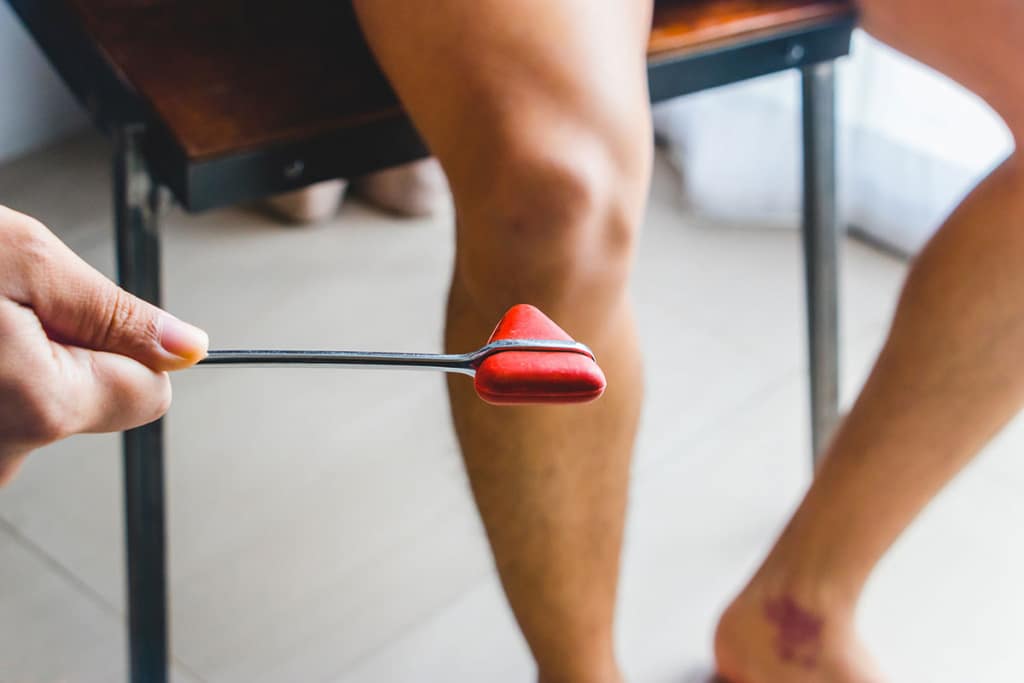
Your doctor will first ask you several questions regarding your medical history, current symptoms, and what led to these symptoms occurring. Your doctor will then examine the way you walk, as well as how you straighten and bend your knee.
Palpation and manual tests or manoeuvres will also be carried out to determine which areas cause pain or show deformities. If necessary, diagnostic imaging tests such as X-rays or MRIs may be ordered to further investigate your condition.

Common risk factors for patellar conditions include:
For additional pain relief, medications like nonsteroidal anti-inflammatory drugs (NSAIDs) may be taken after consulting with a doctor.
To facilitate the healing of more serious kneecap injuries, immobilisation using a cast, splint, or brace may be required. Your doctor may also recommend that you keep your weight off the affected knee while it is healing.
Physical therapy and rehabilitation exercises will likely be recommended in order to restore your knee’s strength and range of motion.
Some severe kneecap conditions may require surgery to realign or tighten the tendons connected to the kneecap. This is often followed by a long recovery period, during which physical therapy will also take place.
The length of the recovery period for patellar conditions depends on the type and severity of your condition. Minor injuries may heal in a matter of weeks, while major conditions involving surgery can take up to 6 months to heal completely. In either case, physical therapy is often required to recover the knee’s strength and a full range of motion.
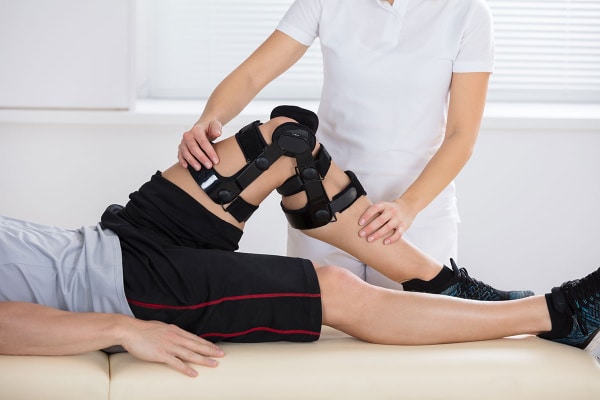

Patellar conditions often come about from sports-related accidents or over-use due to physical activity. In these cases, kneecap conditions can be prevented in the following ways:
If you experience any persistent pain in the front of the knee, do not hesitate to visit an orthopaedic doctor in order to have your condition assessed and treated as soon as possible.
Our friendly team is here to serve you. For urgent enquiries and appointment requests, please call or WhatsApp us directly.
