
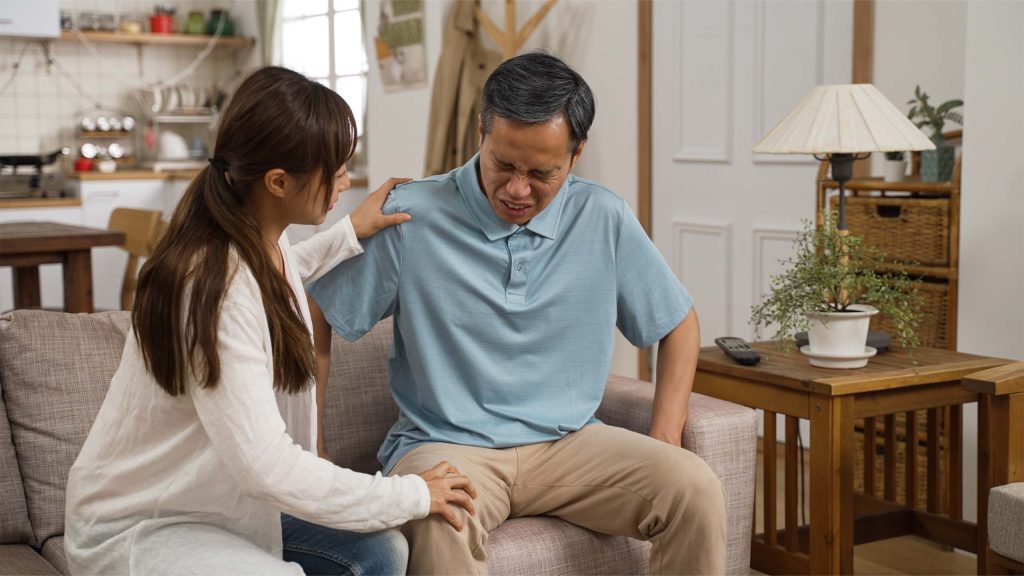
For many, the concern starts when knee pain no longer settles completely and the knee never fully returns to feeling normal. Discomfort that once eased begins to linger, and the joint feels different even on better days. As this happens, walking distances that once felt routine start to feel longer than expected, standing becomes more tiring, and stairs demand more effort than before. At first these changes can seem temporary, so most people adjust and carry on, expecting the knee to improve with time.
Gradually, a clearer pattern begins to emerge. The knee might feel stiff after sitting, ache after a longer walk, or take longer to loosen in the morning, and these symptoms tend to return in the same familiar situations. Recovery after activity becomes slower, movement feels less smooth, and occasional clicking, grinding, or popping sensations begin to appear. When knee symptoms persist in this way, they often point to gradual structural changes within the joint rather than a temporary strain that simply needs more time to recover.
How Knee Joint Damage Develops Over Time
Once structural changes begin within the knee, they usually develop through identifiable joint conditions rather than occurring at random. Each type affects the cartilage and joint surfaces differently, which explains why some knees deteriorate slowly over many years while others worsen more quickly after an injury, and why pain presents differently from one patient to another. The most common causes of joint damage include:
- Alignment related joint wear - Naturally bowed (Genu varum) or knock-kneed (Genu valgum) alignment can place greater stress on one side of the knee. Over time this uneven loading can accelerate joint wear and contribute to progressive symptoms.
- Inflammatory arthritis - Conditions such as rheumatoid arthritis (RA) can cause persistent inflammation and pain within the joint. Ongoing swelling and irritation will gradually damage the knee’s cartilage and surrounding structures.
- Osteoarthritis (OA) – This is the most common cause of progressive knee joint damage. The cartilage lining the joint gradually becomes thinner and less resilient, leading to activity related pain, stiffness after rest, and rougher joint movement over time.
- Post traumatic arthritis - Previous injuries such as ligament tears, meniscus damage, or joint fractures can alter how the knee bears weight. Even after recovery, uneven loading might lead to gradual cartilage wear years later.
Signs Your Knee Problem Might Be Getting Worse
As joint damage progresses, the knee starts to tolerate everyday activities less comfortably. The change is often recognised not just through pain, but through clearer limits in what the knee can handle. These changes tend to develop gradually and often reflect a more advanced stage of joint wear.
Reduced Tolerance to Weight Bearing
As degenerative changes within the knee increase, the joint struggles to sustain weight bearing activity for prolonged periods. The knee might still function, but endurance under load gradually declines.
- Walking distances become shorter before discomfort sets in.
- Pain begins earlier during activity than it used to.
- Standing for prolonged periods becomes difficult.
- Longer outings require planned rest breaks in between.
Increased Joint Irritation
As the joint surfaces continue to deteriorate, the knee might react more readily to everyday use. Episodes of irritation tend to occur more easily and take longer to settle.
- Swelling appears after routine activity.
- Flare ups occur more frequently.
- The knee feels persistently puffy or tight.
- Recovery after increased use takes longer.
Mechanical Limitation of Movement
Structural damage can restrict the physical range of motion within the joint. Over time, certain movements become progressively limited.
- The knee might no longer fully straighten.
- Locking or catching episodes might occur within the joint.
- Deep bending of the knee becomes restricted.
- Stiffness persists throughout the day.
Instability or Buckling
Beyond restriction, joint control might also decline. This reflects reduced stability of the knee rather than reduced range.
- The knee feels unreliable during walking.
- Turning or changing direction feels less steady.
- The knee might buckle unexpectedly.
- Uneven ground becomes harder to navigate.
Increasing Reliance on Support
As functional demands become harder to meet, gradual adaptations often develop. These adjustments reflect compensation rather than recovery.
- Using hands to push up from a chair becomes more common.
- Support from railings is needed when using stairs.
- Weight is shifted more onto the opposite leg.
- A cane, knee brace, or other forms of support are used more frequently.
Symptoms That Affect Rest and Sleep
In later stages, symptoms might extend beyond activity and interfere with periods of rest. Pain is no longer limited to movement alone.
- Aching might develop after sitting still for extended periods.
- Sleeping in a flexed position, such as the foetal position, might increase discomfort.
- Turning in bed can trigger sharper pain or catching sensations.
- Sleep becomes disrupted because of persistent knee discomfort.

When Persistent Knee Pain Needs a Specialist Assessment
By this stage, when limitations extend beyond isolated discomfort and begin to dictate daily movement decisions, the question shifts. Is this still a phase that will settle, or has the knee itself changed? What once felt manageable now feels established. Activities are modified without thinking. Confidence in the joint is reduced. Patterns that used to be occasional have become regular. As this shift takes place, the focus moves from endurance to explanation, from coping with pain and inconvenience to understanding what has progressed inside the knee.
This is where an assessment by a specialist becomes necessary. The aim isn’t simply to confirm degeneration, but to define its pattern and extent with precision. Is the damage confined to one compartment, or is it more widespread? The answer matters. In some cases, symptoms might still be managed with targeted non-surgical care or joint preserving treatments such as cartilage repair and regeneration. In others, when deterioration is more advanced and daily activities continue to be reduced despite your efforts, more definitive options such as partial knee replacement or total knee replacement might need to be discussed. The distinction depends on how far the condition has progressed and how much everyday function has already been lost, and that clarity helps determine what should be done next.
Speak to Oxford Orthopaedics
When knee pain becomes persistent and daily activities are increasingly planned for or modified because of it, defining the true stage of the condition becomes important. At this juncture, a specialist consultation brings that clarity by reviewing symptoms, movement, and imaging findings together to establish how advanced the degeneration has become. With that understanding, Dr James Wee can then outline the treatment options appropriate for your condition, which might range from continued joint preservation to minimally invasive surgical solutions such as a partial knee replacement where indicated. To speak with Oxford Orthopaedics, please contact the clinic to book an appointment.
