
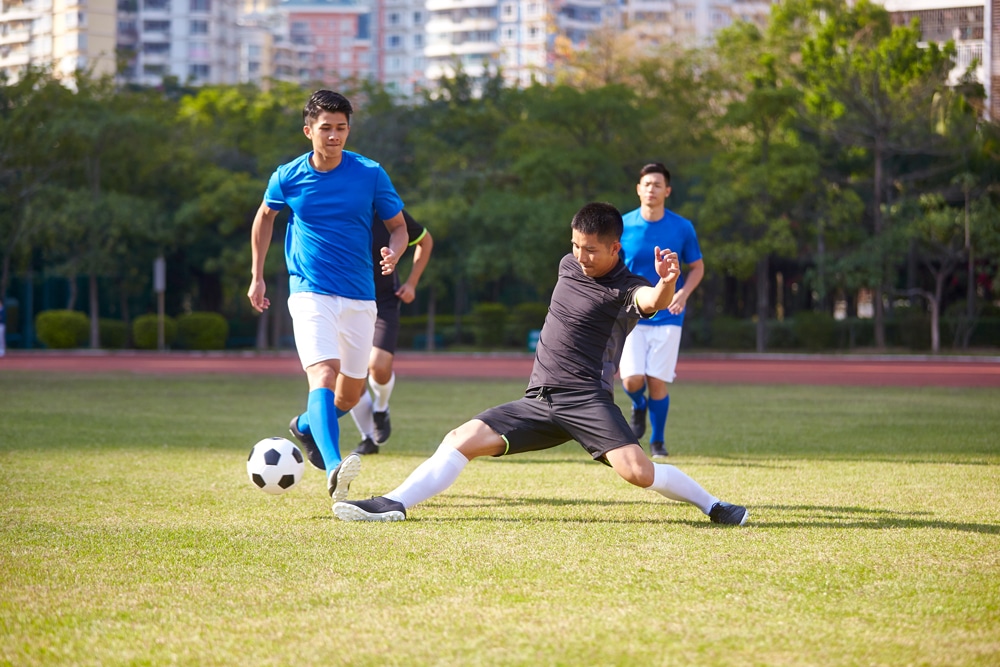
With the 2026 edition of the FIFA World Cup now underway, football is once again taking centre stage around the world. Watching elite players sprint down the flanks, change direction sharply, and strike the ball cleanly can reignite the urge to play more or return to the game, leading to more games across Singapore as regular players add extra sessions and others join in again. At the same time, these games are often played on natural grass pitches that tend to become firmer during the hotter and relatively drier weeks of June, as well as on artificial turfs where the ground feels less forgiving underfoot. Running and turning on these surfaces place repeated stress on the feet, ankles, and knees, and sports injuries can begin to appear.
Once these injuries occur, they usually follow recognisable patterns. A sudden twist of the foot can leave the ankle swollen and painful, while an awkward turn or landing might bring on knee symptoms that weren’t there before. Contact between players is another common cause, particularly when a late challenge or a clumsy tackle with the studs showing catches the foot or ankle unexpectedly. In these situations, the other player might also be injured, but the player on the receiving end is often left with the more significant injury.
Common Football Injuries Seen in Recreational Players
By the time pain appears, the location of the symptoms often gives the first clue to what might be injured. Pain in the foot or toes, heel, ankle, or knee can point to different structures being affected, from bone and tendons to ligaments, cartilage, or muscle. The types of injuries below show how football can affect different parts of the lower limb.
Foot and Toe Injuries
Football places repeated pressure on the forefoot during push off, running, and kicking. Tight football boots can aggravate bunions, while sudden stops or forceful push off movements can lead to turf toe or sesamoid related injuries beneath the big toe.
Ankle Injuries
Ankle injuries often involve the ligaments that stabilise the joint or the tendons that support movement around it. In football, this can include ankle sprains, Achilles related problems, and peroneal tendon injuries along the outer side of the ankle.
Knee Injuries
Knee injuries in football commonly involve structures that help with stability, shock absorption, and smooth joint movement. These include anterior cruciate ligament (ACL) injuries, meniscus tears, cartilage injuries, and more complex injuries involving multiple components within the joint.
Hip and Groin Injuries
Hip and groin pain in football can develop during sprinting, kicking, twisting, or rapid changes in direction. These symptoms might involve the adductors, hip flexors, or structures around the hip joint, and can make running, striking the ball, or pushing off uncomfortable.
Shoulder and Elbow Injuries
Although football mainly affects the lower limb, shoulder and elbow injuries can occur in goalkeepers or after falls and collisions. These might involve shoulder instability, rotator cuff related pain, or elbow pain that affects diving, bracing, landing, or throwing.
Bone Injuries
Football can injure bone in two main ways: sudden force or repeated loading. Tackles, collisions, and awkward landings can cause fractures around the toes, foot, ankle, knee, hip, shoulder, or elbow, while repeated running can lead to stress fractures in the toes, foot, heel, ankle, or lower leg.
Muscle Injuries
Sprinting, sudden acceleration, and forceful kicking can strain the larger muscle groups of the lower limb, including the hamstrings, quadriceps, and calves. These injuries can range from minor strains to more significant tears that affect running, turning, or kicking comfortably.
Why Casual Footballers Get Injured During Major Tournaments
For many recreational players, major tournaments change how they approach the game. The excitement around football season can lead to extra sessions, more spontaneous games, and attempts at moves their bodies haven’t been training for. Some regular players start pushing harder than usual, while others who have just returned after months or years away from the sport quickly discover that their fitness hasn’t kept pace with their enthusiasm.
This gap between motivation and physical readiness is where injuries often begin. When games become more frequent, the body has less time to recover between sessions. Muscles can tire, reactions can slow, and control during turning or landing can become less reliable. At the same time, the feet, ankles, and knees are exposed to more repeated load than they’re used to, placing added stress on the surrounding muscles, tendons, and ligaments. The wrong type of football boots for the surface can add to this strain, especially on firm natural grass, artificial turf, or futsal courts where grip and impact forces differ. With less recovery, poorer control, and higher loading, an ache might worsen, while an awkward landing or mistimed tackle is more likely to cause an injury.
Why Some Football Injuries Keep Coming Back
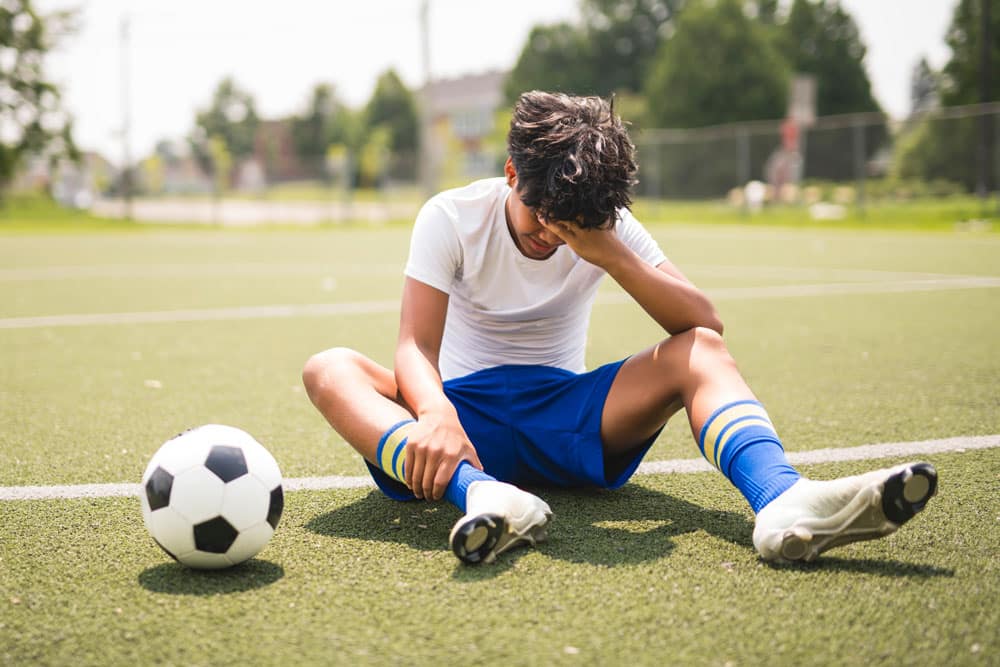
Even when an injury seems minor at first, the way it behaves after the game matters. A small ache might settle after rest, and swelling or stiffness might improve enough for a player to feel ready for the next session. Because of that, many casual footballers assume the problem has settled and return to the same intensity immediately. Others continue playing through discomfort because they don’t want to miss the next game, believe the injury isn’t serious if they can still walk, or treat pain as something to push through.
However, reduced pain doesn’t always mean the injured structure has fully recovered. A sprained ankle can remain unstable even after swelling improves, while tendon, cartilage, or meniscus injuries might become painful again when the same football movements are repeated. When symptoms settle with rest but return during play, or when pain, swelling, stiffness, or instability follows the same pattern after each game, the issue might be more than usual post-game soreness.
When Should You Seek Specialist Care for a Football Injury?
At this point, the question is no longer whether football can cause aches after a game. It’s whether the symptoms are settling as expected or starting to behave like a problem that needs specialist care. Pain that keeps returning, swelling that appears after activity, instability during running or turning, locking, sharp localised pain, or difficulty bearing weight should be taken more seriously.
When these signs appear, the underlying cause isn’t always obvious from pain alone. An orthopaedic assessment can help identify whether the problem is a muscle strain, ligament injury, tendon problem, cartilage injury, joint instability, or bone fracture. This matters because different football injuries can feel similar early on, even when the structures involved are very different. Once the cause is clearer, it becomes easier to understand what needs to be treated, what procedure is best suited for the injury, and when a return to football is likely to be appropriate.
Unsure What Your Football Injury Might Be?
It can be frustrating when a football injury doesn’t improve after a few days, especially when you expect it to settle with rest and time. As the discomfort lingers, uncertainty often starts to creep in, making it harder to tell whether the problem is a minor strain, a sprain, or something more significant. This is especially concerning when pain keeps returning or your confidence to run, turn, pass, cross, or shoot is affected. Assessment at Oxford Orthopaedics can help clarify the injury through a review of your symptoms, physical examination, and imaging where needed. With a clearer diagnosis, our specialists can advise on the treatment approach best suited to the injury and guide your return to football. If your symptoms are affecting daily movement or return to play, please contact the clinic to book an appointment.
