

What’s That Bump on My Big Toe and Why Is It There?
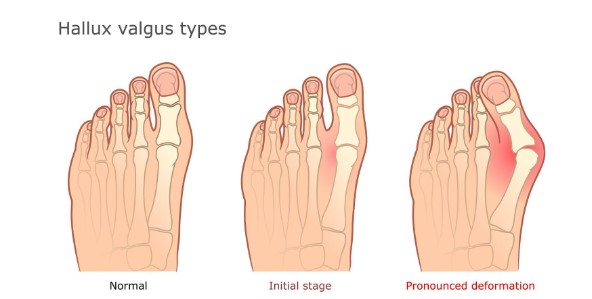
Have you ever looked down at your foot and wondered what that bump beside your big toe actually is? You might notice it even more when it starts to swell, ache, and rub against your shoes, making you question why it’s even there in the first place and why it has suddenly become uncomfortable. This bump might be a bunion, or hallux valgus in medical terms, a common foot condition. It develops as the big toe gradually shifts towards the smaller toes, causing the joint at its base to become more prominent.
Have you ever looked down at your foot and wondered what that bump beside your big toe actually is? You might notice it even more when it starts to swell, ache, and rub against your shoes, making you question why it’s even there in the first place and why it has suddenly become uncomfortable. This bump might be a bunion, medically known as hallux valgus. It’s a common foot condition that develops as the big toe gradually shifts towards the smaller toes, causing the joint at its base to become more prominent.
So, what causes this change in the first place? There’s rarely one single explanation, as several factors can influence how a bunion develops over time. However, before looking at the everyday pressures that might affect it, it helps to first understand why some feet are more susceptible than others, starting with genetics and foot structure.
Conservative measures
Relieving pressure on the foot helps with:
- Orthotics — Modified footwear, or orthotics, relieves pressure by supporting the foot and providing enough room in the toe box to compensate for the bunion.
- Weight Management — Excessive body weight puts unnecessary stress on your feet whenever you’re moving, and your big toe joint suffers the brunt of this pressure. Achieving optimal weight helps reduce pressure, preventing further formation and aggravation of the bunion, as well as increased inflammation and soreness.
- Medication — Medications such as Acetaminophen (Tylenol, others), ibuprofen (Advil, Motrin IB, others) or naproxen sodium (Aleve) can help alleviate pain caused by a bunion. Your orthopaedist may also recommend cortisone injections.
- Applying ice — Icing your bunion after you’ve been on your feet for too long, or if it becomes inflamed, can help relieve soreness and swelling.
Bunion surgery
If these measures do little to relieve your pain and ultimately hinder daily life, you can opt to have your bunion removed entirely. This can be done via conventional open surgery and minimally invasive surgery. Both procedures require a thorough assessment of the deformity and the structure of your feet before discerning what would provide an optimum outcome.
Conventional Open Surgery
Bunion surgery, also known as metatarsal osteotomy or bunionectomy, involves cutting the bones and repositioning them with internal plates, screws and/or wires. This helps straighten the big toe and reduce the deformity on the side of the foot.
Minimally Invasive Surgery
Minimally invasive (MIS) bunion surgery is an alternative to open surgery. This procedure involves a few “keyhole” (2mm-4mm) incisions over the affected areas before correcting deformities using miniature, specialised bone-cutting instruments that reshape the bone while minimising soft tissue injury. After which, the reshaped bone is stably fixed with small screws or wires.

Unlike conventional open surgery, minimally open surgery reduces the risk of infection and quickens recovery because of the precise nature of the smaller incisions. These incisions also reduce the risk of bleeding and guarantee minimal scarring.
Should you get bunion surgery?
Opting for surgery purely for cosmetic reasons is highly inadvisable as the foot is a highly complex biomechanical structure made of numerous bones, ligaments and tendons which bear a person’s weight. The disruption of this mechanic in any form could severely hinder the patient’s ability to move and potentially cause severe and irreparable damage over time.
However, if conservative measures for bunion formation are not proving fruitful, with deformities becoming more prominent and pain becoming increasingly severe, surgical intervention is recommended. You should consider bunion surgery if it is affecting your quality of life and causing great discomfort.
The next step would be deciding what type of bunion removal surgery to opt for. Based on your current condition and eligibility, your Orthopaedist will work with you in discerning what treatment would suit you best.
Book a Bunion Assessment at Oxford Orthopaedics

When bunion pain persists despite shoes with wider toe boxes, custom orthotics, medication, or changes to your activities, a clinical assessment can help clarify why the discomfort is continuing. These measures can ease symptoms or reduce pressure around the big toe joint, but they cannot correct the underlying alignment. Review becomes more important when the bump grows more prominent, shoes become increasingly uncomfortable, or pain starts limiting mobility, exercise, and everyday routines.
At Oxford Orthopaedics, your symptoms, foot shape, joint alignment, toe flexibility, and relevant X-rays are considered together to determine whether non-surgical care remains appropriate or bunion surgery should be discussed. Where correction is being considered, Dr James Siow can advise whether an open or minimally invasive approach is suitable based on these findings. Book an appointment today to determine the best suited options for your bunions.
References:
Aydogan, Umur. “Bunionette Deformity Correction | FootCareMD.” Footcare MD, https://www.footcaremd.org/conditions-treatments/toes/bunionette-deformity-correction. Accessed 10 October 2022.
“Bunions Can Occur at Any Age.” WebMD, 8 February 2001, https://www.webmd.com/skin-problems-and-treatments/news/20010208/bunions-can-occur-at-any-age. Accessed 10 October 2022.
“Bunions – Diagnosis and treatment.” Mayo Clinic, 6 November 2021, https://www.mayoclinic.org/diseases-conditions/bunions/diagnosis-treatment/drc-20354805. Accessed 10 October 2022.
“Bunions – Symptoms and causes.” Mayo Clinic, 6 November 2021, https://www.mayoclinic.org/diseases-conditions/bunions/symptoms-causes/syc-20354799. Accessed 10 October 2022.
“Bunion Surgery.” Johns Hopkins Medicine, https://www.hopkinsmedicine.org/health/treatment-tests-and-therapies/bunion-surgery. Accessed 10 October 2022.
Deland, Jonathan T. “Cosmetic Foot Surgery – Not Recommended by HSS, AFOAS or APMA.” HSS, 21 December 2018, https://www.hss.edu/conditions_cosmetic-foot-surgery-not-recommended.asp. Accessed 10 October 2022.
“The Early Stages of a Bunion.” Shore Podiatry, 29 March 2022, https://www.shorepodiatry.com/blog/item/734-the-early-stages-of-a-bunion.html. Accessed 10 October 2022.
Holland, Anne. “Minimally Invasive Bunion Surgery: Benefits and Recovery.” HSS, 20 January 2022, https://www.hss.edu/conditions_minimally-invasive-bunion-surgery.asp. Accessed 10 October 2022.
KONG, SW. “Bunions FAQs | Foot and Ankle | Doctor Articles.” Asia Medical Specialists, 8 October 2021, https://asiamedicalspecialists.hk/en/health-info/50/Bunions-FAQs. Accessed 10 October 2022.
Nagy, Brian. “Traditional vs Minimally Invasive Bunion Surgery: Know Which is Best.” Nagy Footcare, 7 August 2017, https://www.nagyfootcare.com/blog/traditional-vs-minimally-invasive-bunion-surgery-know-which-is-best/. Accessed 10 October 2022.
“Need Bunion Surgery? A Weight Bearing CT Scan Could Help You Decide.” CurveBeam, 3 May 2016, https://curvebeam.com/weight-bearing-ct/need-bunion-surgery-a-weight-bearing-ct-scan-could-help-you-decide/. Accessed 10 October 2022.
Viscovich, John B. “A Podiatrist’s 7 Best Ways to Prevent Bunions.” Westchester Health, 16 July 2020, https://www.westchesterhealth.com/blog/a-podiatrists-7-best-ways-to-prevent-bunions/. Accessed 10 October 2022.
