

An ankle sprain can happen in a split second. You could roll your ankle in heels while attending an evening gala, twist it while walking downhill on a hike, or land awkwardly after a jump for a rebound during a basketball game. One moment, you’re going about your day; the next, you’re dealing with swelling, pain, and an ankle that suddenly doesn’t feel quite right.
Although the circumstances mentioned above can vary, the result can be the same. A sprained ankle is one of the most common ankle conditions and can affect everything from walking comfortably to returning to the sport you love. So, what exactly happens when you sprain your ankle, what causes it, and how can you tell whether the damage is mild or more serious? For starters, let’s understand what has happened beneath the skin.
What Happens When You Sprain Your Ankle?
An ankle sprain happens when one or more of the ligaments supporting the ankle are stretched beyond their normal range or torn. These strong bands of tissue connect the bones around the joint and help keep it stable as you walk, run, and change direction.
When a ligament is injured in this way, the effects can become noticeable soon after the sprain. Depending on the extent of the damage, these can range from mild discomfort to symptoms that make walking or putting weight through the ankle difficult.
Symptoms of an Ankle Sprain
Swelling and pain are among the most common symptoms of an ankle sprain and can develop soon after the injury. The area might also feel tender, while bruising can appear when small blood vessels around the injured tissues are damaged. As these symptoms develop, you would also find it harder to walk, move the ankle normally, or bear a load through the foot.
How the ankle feels can vary from one sprain to another. A milder sprain might cause relatively limited swelling, pain, and stiffness, while greater ligament damage can make movement more difficult or leave the ankle feeling unstable, as though it could give way or roll again. To understand why these injuries can differ, it helps to look first at how an ankle sprain happens.
What Causes an Ankle Sprain?
Whether an ankle sprain happens while playing a sport like football or during an ordinary step, the underlying mechanism is similar: the ankle is suddenly pushed or twisted beyond its usual range of movement. Common situations that can cause this include:
- Sudden direction changes – Quick pivots or stops can twist the ankle while the foot is still planted.
- Awkward landings – Landing with the foot at an uneven angle can force the ankle beyond its normal range.
- Missteps on uneven ground – Slopes, loose surfaces, or unexpected changes in level can cause the foot to roll unexpectedly.
- Trips and falls – Losing your balance can force the ankle into an awkward position as you try to recover your footing.
Beyond how the sprain happens, certain factors can also make the ankle more vulnerable:
- Previous ankle sprains – Earlier ligament damage might leave the joint less stable, increasing the likelihood of another sprain.
- Footwear choice – High heels or footwear that affects balance or stability can make it easier to roll the ankle.
The direction in which the ankle moves during the sprain also matters because it determines which ligaments are placed under the greatest stress. This is why ankle sprains can affect different parts of the joint.
Different Types of Ankle Sprains
Because different movements place stress on different ligaments, not all ankle sprains affect the same part of the joint. Most are low ankle sprains, involving the ligaments around the ankle itself. These can affect either the outer or inner side, while a high ankle sprain involves the ligaments connecting the tibia and fibula above the joint. The main types include:
- Inversion or lateral ankle sprain – The foot rolls inward, placing greater stress on the ligaments along the outside of the ankle. This is the most common type of ankle sprain and often involves the anterior talofibular ligament (ATFL). A more substantial sprain might also involve the calcaneofibular ligament (CFL).
- Eversion or medial ankle sprain – The foot rolls outward, placing greater stress on the ligaments along the inner side of the ankle. This can affect the deltoid ligament complex, which helps stabilise the inner ankle. Medial ankle sprains are less common than those involving the outer side of the joint.
- High or syndesmotic ankle sprain – The injury affects the syndesmotic ligaments that connect the tibia and fibula above the ankle joint. This can happen when a twisting force places stress between the two lower leg bones. High ankle sprains are less common than the low ankle sprains around the joint itself.
The above describe where the sprain occurs and which ligaments are affected. However, they don’t necessarily indicate how severe the ligament damage is. For that, ankle sprains are commonly divided into three grades.
How Do I Know If My Ankle Sprain Is Grade 1, 2, or 3?
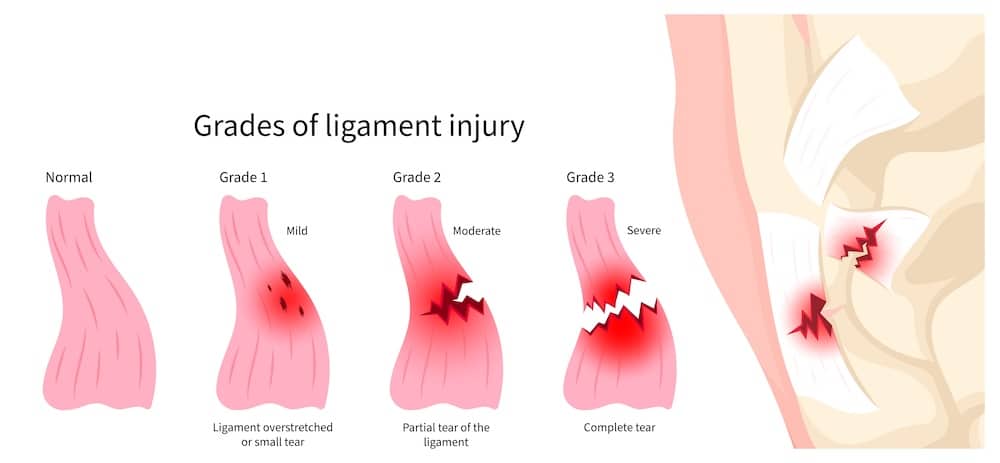
Ankle sprains are also classified by severity, based on how much the ligament has been stretched or torn. This grading system helps describe the extent of ligament damage and the likely impact on movement and ankle stability.
- Grade 1 ankle sprain – The ligament is stretched with minor damage but no significant tear. Swelling and pain are usually mild, and you might still be able to walk, although the ankle can feel stiff or uncomfortable.
- Grade 2 ankle sprain – The ligament is partially torn, so swelling, bruising, and pain are usually more noticeable. Walking can become more difficult, while the ankle might also feel less stable than usual.
- Grade 3 ankle sprain – The ligament is completely torn, resulting in more significant loss of support. Swelling and bruising can be considerable, while load bearing weight can be difficult and painful, with the ankle often feeling unstable.
Although these grades describe the extent of ligament damage, symptoms alone might not always reflect how severe a sprain is. A clinical assessment can help determine which structures are involved and whether further investigation is needed.
How Is an Ankle Sprain Diagnosed?
An ankle sprain can be assessed by looking at where the ankle is tender, how well it moves, whether it feels stable, and how comfortably you can bear weight. How the sprain happened and where the pain is located can also provide clues about which ligaments or other structures might have been affected.
In some cases, further investigation is required. An X-ray would be recommended if a fracture is suspected, while other scans can be considered when there’s concern about more significant soft tissue damage. Together, these findings can help determine the extent of the sprain, what might be needed for recovery, and whether further specialist care should be considered.
Is Your Ankle Sprain Still Affecting Your Movement?
If swelling, pain, or instability is continuing to make it difficult to walk comfortably, bear weight, or return to sports or other recreational activities, it’s worth seeking further assessment. At Oxford Orthopaedics, a specialist assessment can look at the extent of the sprain, the structures involved, and how the injury is affecting your movement. Based on these findings and how you need your ankle to function, Dr James Siow can advise on the treatment options best suited to your needs. These might include rehabilitation and strengthening, while further treatment such as minimally invasive ankle ligament surgery might be recommended for selected cases with more severe or persistent instability. If your ankle remains swollen and painful or unstable after a sprain, please contact the clinic to book an appointment.
