
Every World Cup carries a certain charm. It draws people back to football, fills stadiums with national emotion, and reminds casual fans why the game can feel larger than sport. Yet every tournament also reveals the physical toll on players, and the thin line between a career defining moment and a season altered by injury.
Even before Canada’s historic night against Qatar, the tournament had already carried that reminder in different ways. Brazil’s Rodrygo was ruled out before making the final squad after suffering a meniscus tear and ACL injury. Japan captain Wataru Endo faced a different situation, forced out before the tournament began by a persistent ankle problem. These were very different stages of disruption from what later happened to Ismaël Koné during Canada’s win over Qatar, but they pointed to the same larger truth. At this level, football isn’t only about skill, form, and desire. It’s also about whether the body can withstand the demands placed on it.
When Celebration Turns into Concern
Canada’s first men’s World Cup win should have been a moment defined purely by celebration. A 6 to 0 victory over Qatar on home soil was more than a result. It marked a significant milestone for the nation, made more powerful by the emotion of a host country stepping confidently onto the world stage.
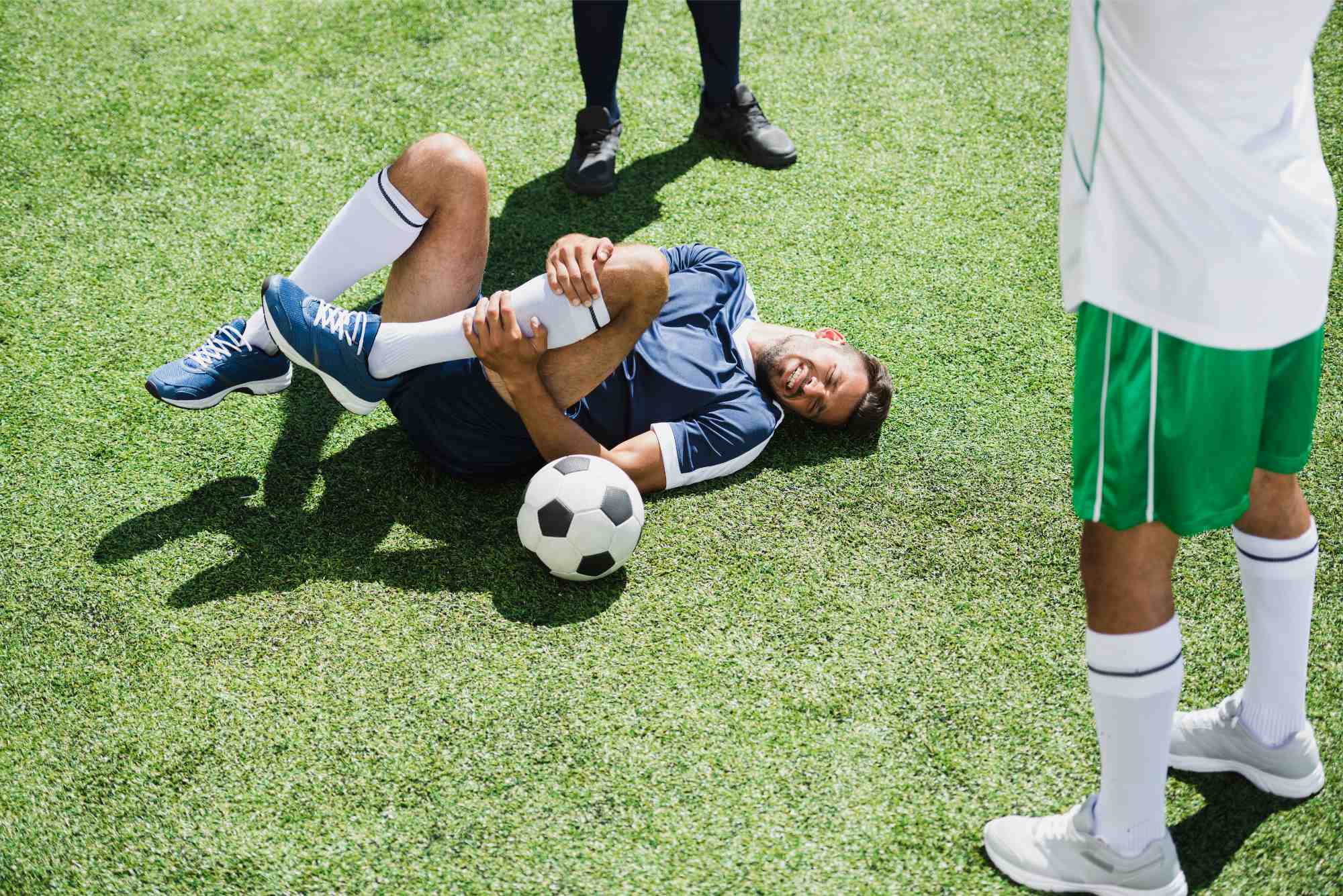
Yet football rarely gives its joy without complication. That historic night was also marred by the serious injury to Koné, who sustained fractures of both the tibia and fibula in his left leg. For those watching, the scene was distressing. For an orthopaedic surgeon, it was a stark reminder that beneath the rhythm and beauty of the game, the forces involved can be unforgiving.
Some injuries linger in football’s collective memory not just because of their severity, but because they abruptly interrupt moments of celebration and shift the emotional tone of a match. Older fans will recall Djibril Cissé’s tibia and fibula fractures in 2004 and 2006. Many will also remember Aaron Ramsey’s injury in 2010, an incident that left an entire stadium subdued. Koné’s injury belongs within this broader category of high energy lower limb trauma, where the implications reach far beyond the immediate pain or the visible deformity of the leg.
Why This Is More Than a Broken Leg
From an orthopaedic surgeon’s perspective, a complete tibia and fibula fracture with obvious deformity is never just a broken leg. It’s a major injury to the lower limb. In the first moments after impact, the priority is to protect the limb before further damage occurs 1.
The Lower Leg Works as A Linked Structure
The reason is anatomical as much as it’s mechanical. The tibia is the main weight bearing bone of the lower leg. It carries the force of standing, running, landing, tackling, and sudden changes of direction. The fibula is smaller, but it still matters. It contributes to lower leg structure, muscle attachment, and ankle stability. When both bones fail, the injury affects the link between the knee, leg, ankle, and foot.
The Risk Isn’t Bone Alone
What Matters in the First Moments
On the pitch, the medical team doesn’t need to know every surgical detail immediately. The first priority is immobilisation, pain control, and careful transfer for imaging and specialist assessment. Stabilising the limb helps reduce pain, limits further soft tissue damage, and allows doctors to assess blood flow, sensation, movement, skin condition, swelling, and fracture alignment.
Another important question is whether the fracture is open or closed. In an open fracture, the broken bone communicates with the outside environment through a wound in the skin. This increases the risk of contamination, deep infection, poor healing, and complex soft tissue problems 3. In a closed fracture, the skin remains intact, although the internal damage can still be severe.
The difference matters because two injuries can look similarly shocking on television but carry very different implications once the player is assessed properly. The skin, soft tissues, blood vessels, nerves, fracture pattern, and degree of swelling all influence the urgency, surgical plan, and recovery outlook 3.
In Koné’s case, public reports confirm a surgically treated tibia and fibula fracture. Unless his medical team provides more detail, the responsible approach is to discuss the principles of managing this type of trauma rather than assume the exact condition of every internal structure involved.
Surgery Is Only the Beginning
Surgery for a severe tibial fracture is usually aimed at restoring alignment, length, rotation, and stability. In suitable cases, this can be done through a relatively small incision using an intramedullary nail 4. This is a strong metal rod inserted into the central canal of the tibia, often through an approach near the knee, before locking screws are placed to hold the nail in position while healing takes place.
Still, the operation isn’t simply about making the x-ray look orderly. Its deeper purpose is to give the leg the best possible chance of healing in a position that can support normal walking mechanics first, then higher demand movement later.
For a professional footballer, that second stage is crucial. A leg that’s comfortable for daily life isn’t automatically ready for acceleration, deceleration, pivoting, tackling, shielding, striking the ball, and absorbing contact under fatigue.
In selected cases, partial weight bearing can begin early after surgery, sometimes within the first few days. That decision depends on the fracture pattern, fixation stability, pain, swelling, soft tissue condition, and the surgeon’s assessment. Early movement, when safe, can help reduce stiffness and muscle loss. Even then, progression has to be guided carefully. Too little loading can slow recovery, while too much too soon can threaten healing.
Why Match Fitness Takes Longer Than Bone Healing
For my own patients, this is where the partnership between surgeon, physiotherapist, and patient becomes central. The surgeon monitors the fracture, fixation, soft tissues, and healing response. The physiotherapist helps restore movement, strength, walking pattern, balance, and confidence. The patient then has to commit to the slow discipline of rehabilitation, which is often less visible than surgery but just as important.
Early rehabilitation typically begins with controlling swelling, restoring knee and ankle movement, and helping the patient walk safely while maintaining as much muscle function as possible. As healing progresses and the fracture becomes more stable, the focus shifts toward more demanding work, with gradual increases in strength, balance, and coordination, allowing the patient to rebuild confidence in the limb.
For a footballer, however, this stage of recovery is only the beginning. From here, rehabilitation must gradually shift toward the specific demands of the sport. Straight line walking and running aren’t enough. The player needs to progress toward cutting, turning, landing, decelerating, absorbing contact, and sustaining repeated high intensity movements under fatigue 5.
This is the part of recovery that the public often underestimates. Bone healing and match readiness aren’t the same milestone. The fracture might show encouraging union within a few months, yet the player still needs to rebuild power, rhythm, reaction speed, agility, and endurance. A midfielder like Koné must do all of this while returning to a role built on repeated running, sudden changes of tempo, body contact, and technical control.
The Road Back Is Still Possible
The outlook can still be very good. If there are no major complications such as nerve injury, vessel injury, infection, compartment syndrome, tendon rupture, muscle loss, malalignment, delayed union, or non-union, many patients can return to high levels of function after surgical stabilisation of a tibia fracture.
For professional footballers, this means that even after the initial stages of healing and rehabilitation, the timeline to return to match fitness is measured in months rather than weeks. In favourable cases, a return around six to nine months after surgery can be reasonable, although some players might need longer before they are truly ready for full competition6.
This distinction matters because the final stage isn’t only medical clearance. It’s performance restoration. The player must be able to sprint without hesitation, change direction without guarding, absorb contact without fear, and repeat demanding movements without the injured side falling behind. In elite football, the margin between recovered and ready is thin.
The Wider Lesson for Players and Fans
World Cup fever often pulls people back to the joy of the sport. It restarts old conversations, fills pitches, and sends recreational players back into games after months or years away. Koné’s injury sits at the far end of the spectrum, but it carries a wider lesson. Football injuries should be taken seriously when there is severe pain, visible deformity, an inability to stand or walk, or rapid swelling, rather than being brushed aside because the player wants to continue or the game needs to go on.
Severe deformity, intense pain, inability to bear weight, rapidly increasing swelling, numbness, a cold or pale foot, or a wound near a suspected fracture should always prompt urgent medical attention. In moments like these, it can be tempting to push on or downplay the injury, but the wiser response is to recognise when the limb needs protection, careful assessment, and proper care.
Koné’s injury was a painful interruption to Canada’s historic night, but it shouldn’t be seen as the end of his story. As discussed earlier, modern fracture surgery, careful monitoring, and structured rehabilitation have allowed many footballers to return from injuries that once looked career defining. The road back is long, and it’s rarely linear, but with the right conditions, recovery is very possible.
That is the orthopaedic lesson behind the football moment. A fracture of the tibia and fibula is a serious injury, but it’s also an injury with a path forward. The work begins with urgent care, continues through surgery and healing, and is completed only when the player has earnt back the confidence, strength, and control that the game demands.
When Recovery After a Football Injury Still Needs a Specialist Review
Getting through the initial injury is only one part of recovery. As walking becomes easier and normal movement returns, some patients begin to notice that the leg still doesn’t feel the way it used to. This can show up as hesitation on uneven ground, reduced push off, altered loading, or difficulty trusting the limb when movement becomes faster or less predictable. These changes don’t always mean that the fracture has failed to heal. Instead, they raise a different question about whether the lower limb is coping well enough with the demands being placed on it again. At Oxford Orthopaedics, a specialist review can help assess the recovery so far, evaluate how the leg, ankle, and foot are working together, and guide the next step best suited for the patient’s symptoms, activity demands, and recovery goals. To arrange for a consultation with Dr James Siow, please contact the clinic to book an appointment.
References
- American College of Surgeons. (2018). Advanced trauma life support: Student course manual (10th ed.). American College of Surgeons.
- Thompson, J. H., Koutsogiannis, P., & Jahangir, A. (2023, July 31). Tibia fractures overview. In StatPearls [Internet]. StatPearls Publishing. https://www.ncbi.nlm.nih.gov/books/NBK513267/
- Mabrouk A, Jahangir A. Tibia Diaphyseal Fracture. [Updated 2025 Dec 1]. In: StatPearls [Internet]. Treasure Island (FL): StatPearls Publishing; 2026 Jan-. Available from: https://www.ncbi.nlm.nih.gov/books/NBK537173/
- Bode G, Strohm PC, Südkamp NP, Hammer TO. Tibial shaft fractures – management and treatment options. A review of the current literature. Acta Chir Orthop Traumatol Cech. 2012;79(6):499-505. PMID: 23286681.
- Taberner M, van Dyk N, Allen T, Richter C, Howarth C, Scott S, Cohen DD. Physical preparation and return to sport of the football player with a tibia-fibula fracture: applying the ‘control-chaos continuum’. BMJ Open Sport Exerc Med. 2019 Oct 30;5(1):e000639. doi: 10.1136/bmjsem-2019-000639. PMID: 31749984; PMCID: PMC6830476.
- Boden BP, Lohnes JH, Nunley JA, Garrett WE Jr. Tibia and fibula fractures in soccer players. Knee Surg Sports Traumatol Arthrosc. 1999;7(4):262-6. doi: 10.1007/s001670050160. PMID: 10462219.
