
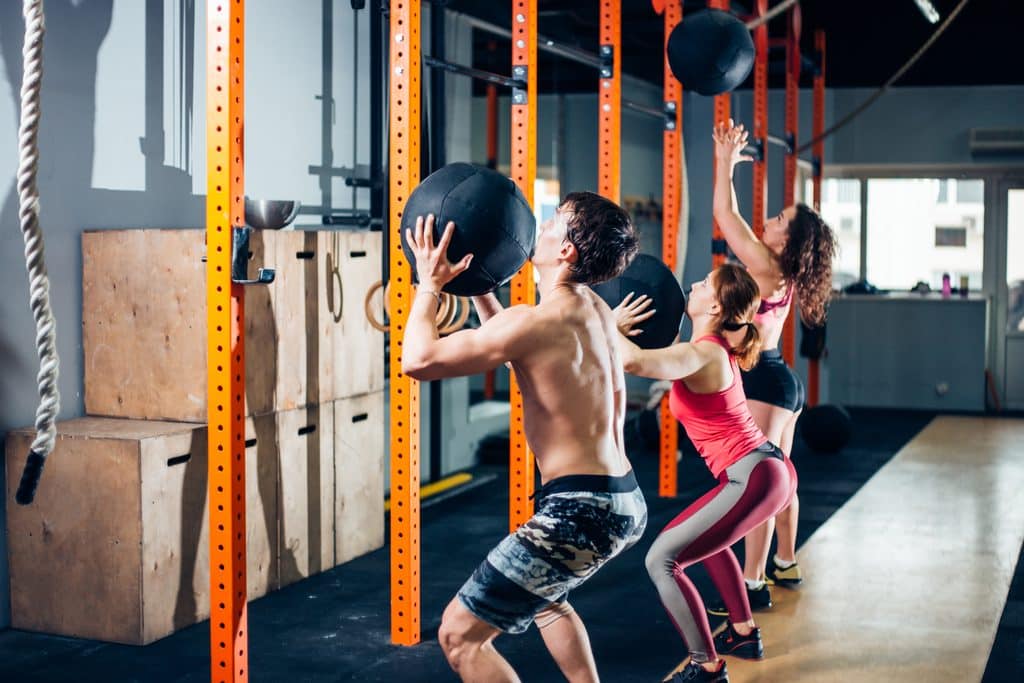
By the last Wall Ball of a HYROX race, you’ve already covered eight kilometres of running and seven stations, and you’re finishing 100 squats, each ending with a medicine ball thrown up at a target on the wall. Before this final station, you’ve brought two handles down from above your head to your thighs on the SkiErg, pushed a weighted sled, pulled a lighter one towards you with a rope, and dropped your chest to the ground before each jump forward in the Burpee Broad Jumps. After that last jump, you’ve rowed, carried a heavy kettlebell in each hand, and lowered your back knee to the floor on every step of the Sandbag Lunges.
With more than 18,500 athletes expected at AIA HYROX Singapore, held at Singapore Expo from 26 to 29 November, many people are now repeating these stations week after week in training. From an orthopaedic point of view, each station puts its own kind of strain on the joints, so this repetition can lead to overuse problems. A single awkward movement, such as twisting your knee mid-lunge or rolling your ankle as you land from a jump, can also cause a sudden injury. Knowing which problems tend to develop in the shoulders, elbows, knees, ankles, and feet can help you tell an ordinary training ache from one that needs checking. The shoulders come first, since you begin working them at the very first station, the SkiErg.
Shoulder Issues from the SkiErg, Sled Pull, and Wall Balls
The SkiErg and Sled Pull both work your shoulders through pulling. Each SkiErg pull starts with your hands just above your head. On the Sled Pull, you stand in a marked box and haul the sled in on a rope, using your arms, shoulders, and bodyweight. The Wall Balls reverse that direction, as your legs drive you out of a squat and your arms extend to throw the medicine ball up to the target, then catch it as it drops. In a single race, you repeat these pulling, throwing, and catching movements many times over.
Such repetitive movements can affect the shoulder’s tendons in the following ways:
- Rotator cuff-related shoulder pain (impingement or strain) – You feel a dull ache deep in your shoulder when you lift your arm or lie on that side at night. Pulling and throwing can swell the rotator cuff tendons until the bone above pinches them.
- Biceps tendinopathy – The front of your shoulder feels tender during overhead work such as Wall Balls, and you might notice an occasional snap. Overuse can fray the biceps tendon that runs down from the top of the socket.
Less often, a sudden force can tear the rim of the socket or a tendon, or push the ball out of place:
- SLAP (superior labrum, anterior and posterior) tear – A sudden, hard pull, such as on the sled rope, can tear the cartilage rim at the top of the socket, where the biceps is attached. You might then feel catching, grinding, or pain lifting overhead.
- Rotator cuff tear – Jerking a heavy kettlebell off the floor can tear one of your rotator cuff tendons. You might feel or hear a pop, with intense pain and immediate weakness when you lift your arm.
- Shoulder dislocation and instability – A hard fall, such as during Burpee Broad Jumps, can force the ball of the arm bone out of its socket. The shoulder hurts intensely, looks out of place, and can later feel loose or slip out again.
The same sled pulls and kettlebell carries depend on a firm grip as well, which puts strain on the elbows.
Elbow Issues from the Sled Pull, Rowing, and Farmers Carry
You grip the rope on the Sled Pull, hold the handle through 1,000 metres of Rowing, and walk 200 metres on the Farmers Carry with a kettlebell in each hand and your arms straight by your sides. The forearm muscles that control your wrist and fingers attach to the bone on the inner and outer sides of the elbow, so every grip tenses them where they attach.
This repeated gripping can strain the elbow’s tendons in the following ways:
- Tennis elbow (lateral epicondylitis) – Pain builds on the outside of the elbow, making it harder to grip when turning a doorknob or holding a cup. Repeatedly tensing the muscles that raise your wrist can break down the tendon there.
- Golfer’s elbow (medial epicondylitis) – You feel tenderness on the inside of the elbow, which flares when you grip, lift, or make a fist. Gripping over and over again can overwork the muscles that bend your wrist and fingers.
Not all injuries build up gradually. A sudden force can also tear a tendon or push the elbow out of joint:
- Distal biceps tendon tear – If a heavy sled forces your bent arm straight, the biceps tendon at the front of the elbow can tear. You might feel a pop, then severe pain and weakness when you bend your elbow or rotate your forearm to turn your palm up.
- Elbow dislocation – Falling onto an outstretched hand, such as slipping between stations, can drive the elbow out of its socket. The pain is severe, and the arm can look misshapen or twisted at the elbow.
While your shoulders and elbows work hardest whenever you pull or carry, your knees bend and straighten from start to finish, through every kilometre of running and nearly every station.

Knee Issues from Running, Sandbag Lunges, and Wall Balls
Running puts extra stress on the knees, and a HYROX race includes eight one-kilometre runs, each leading straight into a station. The deepest bends then come in the last two stations. On the Sandbag Lunges, you cover 100 metres with the bag across your shoulders, sinking low on every step, and each Wall Ball begins with a squat that drops your hips below your knees.
All this running and bending can stress the front and outside of the knee in the following ways:
- Patellofemoral pain (runner’s knee) – A dull ache sets in around the kneecap on stairs, when kneeling, or after sitting for long. Adding distance too quickly, or letting your knee drift inward as you squat, can irritate the tissue around the kneecap.
- Patellar and quadriceps tendinopathy – You feel pain just below or above the kneecap, often as you start training or after a hard session. Repeated running and jumping can cause tiny tears in the tendons linking the kneecap to the thigh muscles and shinbone.
- IT band syndrome – Pain on the outside of the knee comes on during your runs and eases with rest. Over many kilometres, the iliotibial band rubs against the bone at the side of the knee and becomes swollen.
Where the above take kilometres to develop, a single twist can damage cartilage or tear ligament:
- Meniscus tear – Turning sharply on a planted leg, or dropping into a deep squat on a Wall Ball, can tear the meniscus that cushions the thighbone from the shinbone. You might notice swelling, stiffness, or a knee that locks in place.
- Knee cartilage injury – Repeated running, jumping, and squatting can gradually damage the smooth cartilage covering the ends of the knee’s bones. When this happens, the knee might click or grind as it moves, then ache and swell after training or the next day.
- Anterior cruciate ligament (ACL) injury – Coming down awkwardly from a jump, such as a Burpee Broad Jump, can tear the ACL. You might hear a pop, then feel the knee swell fast and give way, and the cartilage or meniscus is often hurt too.
Though your knees absorb every landing and stride, they aren’t the only part of your lower body working hard. With a run before every station, your ankles and feet take the initial impact of each step and push you off into the next.
Ankle and Foot Issues from Running, Sled Push, and Burpees
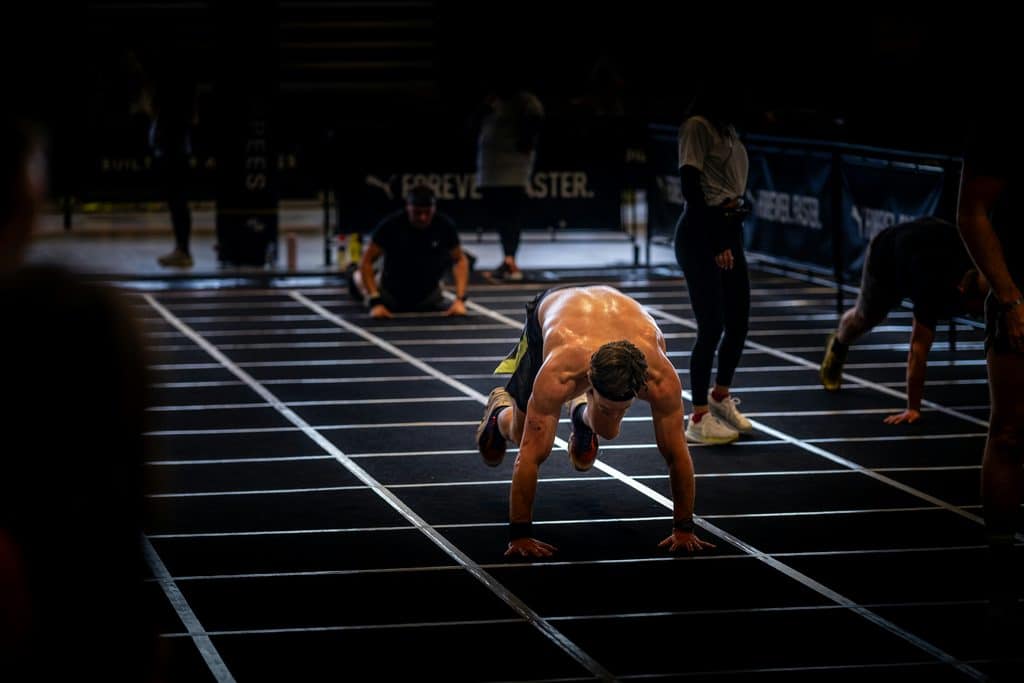
Between these runs, you lean into the Sled Push at a steep angle and drive forward in short, powerful steps, then take off and land with both feet together across 80 metres of Burpee Broad Jumps. Every step and jump works the Achilles tendon behind your heel and the plantar fascia that supports the arch of your foot.
This constant stepping and jumping can overload the ankle and foot in the following ways:
- Achilles tendinopathy – A mild ache settles at the back of the heel after a run, with stiffness especially in the morning. Rising onto your toes again and again, as you do on the Sled Push, can strain the tendon.
- Plantar fasciitis – You feel a sharp, stabbing pain under the heel with your first steps out of bed or after sitting. Repeated tension on the plantar fascia can cause small tears that leave it irritated.
- Metatarsalgia – The ball of your foot aches or burns, as if a pebble were stuck in your shoe. Hours of running press hard on the metatarsals, the long bones behind your toes, until they become inflamed.
- Stress fracture – Pain at one spot on the foot grows during runs and eases with rest. When training climbs faster than your bones can adapt, tiny cracks can form in the metatarsals or the navicular bone in the midfoot.
Alongside these slow-building problems, a single bad step or landing can injure the ankle in a moment:
- Ankle sprain – Turning your ankle on an awkward landing, or stepping badly between stations, can stretch or tear the ligaments on its outer side. Pain, swelling, and bruising follow, and the ankle can feel unstable.
- Ankle cartilage injury (osteochondral lesion) – Beyond the ligaments, a bad sprain can also damage the cartilage covering the top of the ankle bone, along with the bone beneath it. Deep pain, swelling, or catching can linger or appear months later.
- Achilles tendon rupture – Jumping or landing with sudden force, such as on a Burpee Broad Jump, can tear the Achilles tendon. The tear can feel like a kick to the calf, with a pop, sharp pain near the heel, and trouble walking.
From the first SkiErg pull to the last Wall Ball, every joint from your shoulders to your feet can be injured in a single moment or strained over weeks. Of the two, sudden injuries are usually the more obvious, with a pop, rapid swelling, or a joint that’s visibly out of place. Overuse problems, by contrast, are easier to brush off, since many start as an ache that settles once you warm up, much like ordinary training soreness. But where soreness tends to fade within a few days, an ache that keeps returning session after session is one to be checked early, just as you would a sudden injury, rather than push through the pain.
Looking for a Specialist for Joint Pain Caused by HYROX?
An aching shoulder after the Sled Pull or a sore ankle after the Burpee Broad Jumps can come from more than one problem, such as a strain that has built up over weeks of preparation, a sudden injury from a misstep or awkward twist, or another underlying condition. Each of these calls for different care, so without knowing which one you’re dealing with, it’s hard to decide whether to rest, ease off, or keep training as race day approaches. Knowing the actual cause through a proper assessment takes the guesswork out of this decision.
At Oxford Orthopaedics, this assessment begins with a review of how and when the pain started, followed by a physical examination of the joint. If the examination alone can’t confirm the cause, an X-ray or MRI can help identify the problem and its severity. With a clearer diagnosis, our orthopaedic specialists can then recommend treatment for the specific problem, from non-surgical care to surgery when a tear or other damage needs repair. If the pain is still affecting your training or daily movement, please contact the clinic to book an appointment.
