
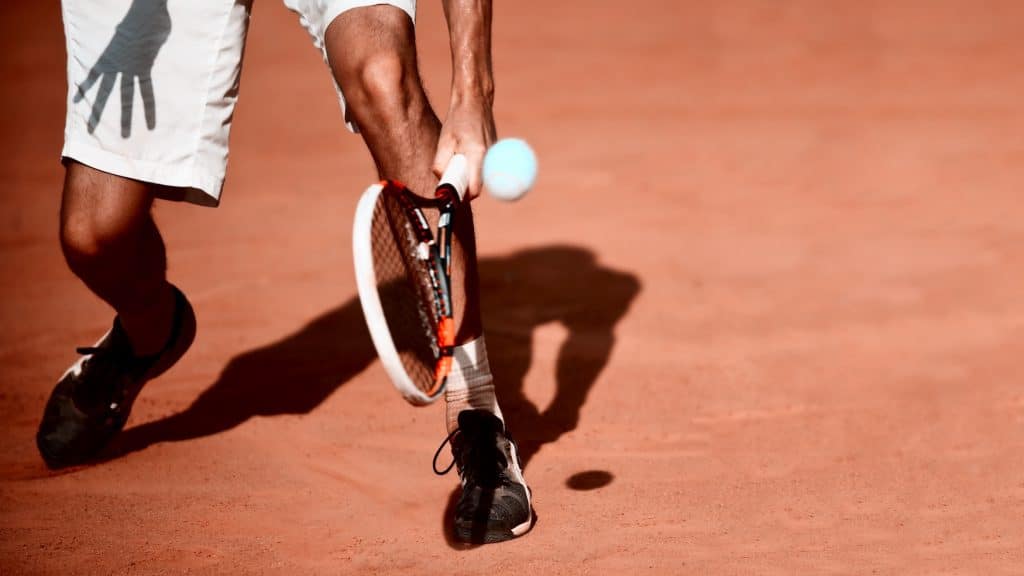
In September 2026, the Singapore Tennis Open brought a week of top-level women’s tennis to The Kallang, with Leylah Fernandez taking the title. For anyone watching, it was a close look at how much the sport asks of the body.
Every rally in tennis is built on footwork. Before you hit a single shot, your feet and ankles have already sprinted, braked, pivoted and pushed off, often several times in a few seconds. This constant stop-start movement can take its toll, sometimes in an instant. In May 2017, Eugenie Bouchard twisted her right ankle chasing a drop shot in practice and tore a ligament, forcing her to pull out of the Nuremberg Cup a week before the French Open.
Not every injury starts with one dramatic moment, though; some build gradually, match after match. Anna Kournikova missed three Grand Slams in 2001 because of a lingering stress fracture in the long bone along the outer edge of her left foot. Lleyton Hewitt’s left big toe became arthritic and misshapen over years of driving off the court on his serve, and in 2012 he had surgery to fuse the joint. So, from ankle sprains and instability to Achilles, forefoot, and big toe pain, what are some of the foot and ankle problems tennis players can experience, and why do they happen?
Why Is Tennis Hard on Your Feet and Ankles?
Much of the answer lies in three demands that tennis places on your feet and ankles: the directions you move in, the force they absorb, and how often that loading is repeated.
First, tennis is played in every direction, not just forward and back. When you move sideways, your ankle has to stay stable while your body weight shifts over it. This stability can be lost in a fraction of a second: if your shoe grips the court while your body keeps moving, your weight can tip over the outer edge of the foot and roll the ankle inwards beyond its normal range. The same planted-foot moment can also send twisting forces further up the leg, which is why it can be linked to knee injuries in tennis.

Then there’s the force behind these movements. In tennis, your feet and ankles interact with the court during each step, stop, and landing, helping absorb and redirect forces as you move. The Achilles tendon, which connects your calf muscles to your heel, contributes to push off by storing elastic energy as it stretches under load and releasing some of it as it recoils, much like a spring. During many push-off movements, pressure shifts towards the ball of the foot as the big toe joint bends upwards. These movements are part of a coordinated kinetic chain: during a serve, the legs and the core help generate and transfer force through the body to the racquet arm. If a foot or ankle problem changes how this chain works, it can alter the demands placed on the shoulder, elbow, and wrist.
Finally, there’s how often all of this happens. Over a single match, and even more so over a training period or a run of tournaments, the same structures are loaded repetitively. As with many other injuries in tennis, this combination of sudden force and constant repetition means foot and ankle problems tend to begin in one of two ways.
Which Foot and Ankle Problems Affect Tennis Players?
Some foot and ankle injuries happen in a single moment on court, while others build gradually over time. Knowing which pattern fits can offer useful clues: an ankle that rolls during a quick change of direction raises different possibilities from heel pain that creeps up over weeks of increased play.
Foot and Ankle Injuries That Can Happen Suddenly
During some movements, the forces on the foot and ankle can exceed what the tissues can tolerate in a single moment.
- Ankle sprains – The foot rolls inwards during a quick sideways movement or an awkward landing, stretching or tearing the ligaments on the outside of the ankle.
- Peroneal tendon injuries – The same inward roll can strain or tear the peroneal tendons, which help steady the ankle, causing pain just behind the outer ankle bone.
- Fractures – A harder roll can break a bone, commonly around the ankle or along the side of the foot, and might leave you unable to bear weight.
- Achilles tendon rupture – An explosive push-off can tear the tendon, often felt as a kick to the back of the leg, particularly in players in their 30s and 40s.
- Turf toe – Bending the big toe too far upwards during a lunge or abrupt stop can sprain the joint at its base, leaving it swollen and tender.
Foot and Ankle Problems That Can Develop Gradually
With gradual problems, repeated loading matters more than any single moment, especially when the foot and ankle are asked to do more than they can recover from. An earlier injury or the foot’s natural shape can also play a part.
- Chronic ankle instability – After a sprain, the ligaments can stay stretched and the ankle’s balance and strength might not fully return, leaving it loose and prone to giving way.
- Achilles tendinopathy – Overloading the tendon can leave it stiff and sore at or just above the heel, with pain that eases on warming up but returns after play.
- Plantar fasciitis – Strain can irritate the band of tissue along the sole, causing sharp heel pain with your first morning steps, especially after long hours on hard courts.
- Stress fractures – Tiny cracks can form in the midfoot or forefoot when court time increases faster than the bones can adapt, causing pain that builds during play.
- Sesamoiditis – Hours on the balls of your feet can inflame the small bones and tendons beneath the big toe joint, so rising onto your toes hurts.
- Big toe arthritis (hallux rigidus) – As the cartilage wears, sometimes after turf toe, the big toe joint can lose its bend, making it painful to drive off for sprints and serves.
- Bunions (hallux valgus) – The big toe drifts towards the second toe, forming a bony bump; tennis isn’t the cause, but a snug court shoe can aggravate it.
What Are Some Symptoms You Should Look Out For?
If watching the Singapore Tennis Open has you dusting off your racquet, it’s worth knowing that some foot and ankle soreness after a game can be a normal part of returning to tennis, especially after a long break. With less recent conditioning, your muscles might be less accustomed to the sport’s repeated demands of lunging, stopping, and landing, as they absorb force to slow your body down. This unfamiliar workload can cause delayed onset muscle soreness (DOMS). Still, not every ache is a sign of being out of practice. Pain that persists or worsens deserves closer attention.

Some symptoms to look out for include:
- Difficulty bearing weight – Pain after a sudden injury can make standing or walking difficult, sometimes preventing you from taking more than a few steps.
- A sudden pop in the calf – A pop or the feeling of being struck at the back of the lower leg, followed by weakness when pushing off or standing on tiptoe.
- Swelling or bruising – Visible swelling, tenderness, or purple bruising around the foot or ankle after a twist, awkward landing, or direct impact.
- Pinpoint bone pain – A sharply localised tender spot over one foot bone, with pain that might first appear during play before affecting ordinary walking.
- Outer ankle pain – Pain or swelling behind the outer ankle bone, sometimes extending along the outside of the foot and worsening with walking or foot movement.
- Ankle instability – The ankle repeatedly rolls or buckles, particularly during quick changes of direction, and might feel weak or unreliable after an earlier sprain.
- Heel pain – Pain under the heel is often most noticeable during the first steps after waking or sitting, sometimes easing with movement before returning after activity.
- Pain or stiffness along the Achilles – Discomfort along the back of the heel or the tendon above it, often accompanied by stiffness after rest or pain during or after activity.
- Pain beneath the big toe joint – Pain directly under the big toe joint, at the ball of the foot, particularly when pushing off, standing on tiptoe, or putting pressure on the forefoot.
- Pain after the big toe bends upwards – Pain and swelling around the base of the big toe after it bends sharply upwards, with discomfort when bending it back or pushing off.
- Stiffness when bending the big toe – Gradually increasing stiffness at the base of the big toe, with reduced upward movement and pain when bending the toe or pushing off.
- A bump at the base of the big toe – A prominent bump on the inner side of the joint; sometimes with redness, tenderness, or rubbing where the shoe presses against it.
Although the above can offer useful clues, they don’t always reveal the exact cause of your pain. An orthopaedic specialist can assess the affected area, distinguish between possible conditions, and recommend an appropriate treatment approach based on the underlying problem.
When Should You Get Foot or Ankle Pain Checked?
Sometimes, the clearest sign of a problem is how it changes your movement. You might hesitate when pushing off, favour the other foot when landing, or alter your movements when your ankle feels unstable. Although these adjustments might help you avoid discomfort in the moment, they can change how forces are distributed through the kinetic chain, placing additional demands on other joints and potentially contributing to problems elsewhere. When these changes persist or recur, identifying the underlying cause becomes important rather than continuing to compensate for the discomfort.
At Oxford Orthopaedics, an assessment can help identify the source of your symptoms and determine whether imaging is needed to clarify the diagnosis. Based on the findings, Dr James Siow can explain the treatment options that’s best suited to your condition, ranging from non-surgical care to minimally invasive surgery (MIS). To understand what might be contributing to your symptoms and discuss the next steps, please contact the clinic to book an appointment.
